


Kok report draws praise and criticism from Lisbon stakeholders
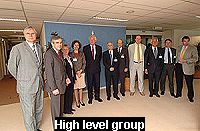
Initial reactions to the report on the Lisbon strategy, drawn up by former Dutch premier Wim Kok and his high level group, have been mixed, with many stakeholders identifying both strengths and weaknesses in the document. The emerging consensus among business organisations appears to be that while they agree with the report's analysis of the poor progress made in the Lisbon process to date, there is a lack of concrete proposals to improve Europe's performance. Eurochambres, the association of European chambers of commerce and industry, welcomed the report, and agreed with its assessment that Member States have allowed the Lisbon process to stagnate through their own inaction. However, the organisation also identified a number of 'missing elements' in the high level group's final analysis. According to Eurochambres, businesses had expected a clear statement from Mr Kok on the balance between the economic, social and environmental pillars of the Lisbon strategy. 'Currently, the strategy is imbalanced towards the social and environmental pillars. We must rebalance and make the economy the top priority for the years to come,' argued its president, Christoph Leitl. 'Also, the Competitiveness Council must be reformed by limiting its membership to a smaller number of key ministers who take national ownership of the agenda,' he added. The Eurochambres statement goes on to outline a number of additional proposals aimed at giving the high level group's report 'more teeth', for instance by obliging Member States to formulate national action plans on the Lisbon strategy on an annual basis. There was a similar message from UNICE, the union of industrial and employers' confederations of Europe, which complained of a lack of 'concrete and focused suggestions as to how to breathe fresh life into the Lisbon strategy.' The organisation also bemoaned the failure of Mr Kok's group to mention the Competitiveness Council, and stressed that social cohesion and environmental ambitions are only possible in a growing economy. UNICE president Jürgen Strube said: 'The success of the Lisbon strategy's mid-term review lies largely in sound preparation of the Spring Summit - for which the Kok report is a first step - in tandem with the political will of EU countries to adapt Europe to the new challenges.' Reaction from political quarters focused less on perceived failings in the content of the report itself, instead echoing the key message that Member States must take more ownership of the Lisbon agenda. The current President of the European Council, Jan Peter Balkenende, said: 'It is a solid report. One that makes crystal clear that there is still a lot to do.' He continued: 'The group pointed out that the Member States and institutions must tackle their economic reforms more forcefully. [...] This is a serious message.' According to Mr Balkenende, the recipe for success in the Lisbon process is education, knowledge, innovation and a serious increase in the number of people in the workforce. 'That will require drastic reforms,' he warned. Meanwhile, the economic affairs spokesperson for the European People's Party in the European Parliament didn't pull any punches when it came to apportioning blame for Europe's poor performance to date. Alexander Radwan said that the Lisbon agenda's 'overoptimistic aims' are worthless if European heads of government fail to push through significant measures at home. 'It is no wonder the EU is unable to improve its competitiveness,' he concluded.