


UK backs EU Patents Directive
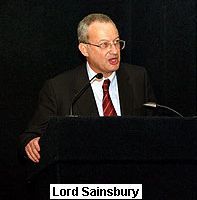
The EU's proposed patents directive will not have an adverse impact on the software market, said the UK Minister for Science and Innovation, Lord Sainsbury on 14 December Speaking at a meeting organised by the UK's Department of Trade and Industry (DTI) to discuss the European directive on patented inventions, Lord Sainsbury maintained the UK's support for the directive, denying that it will lead to widespread software patents. 'Patents provide the confidence to invest in R&D [Research and Development] for technological industries and the current draft directive will ensure that Europe continues to strike the right balance and provides clarity as to what can and cannot be patented with regard to computer implemented inventions,' said Lord Sainsbury The UK government, added Lord Sainsbury, is making a 'firm commitment to a patent system which foster and supports innovation in all areas of technology, including inventions which rely on software.' The European draft Directive on the patentability of computer-implemented inventions, which is currently under consideration by both the European Council and Parliament, will allow patents for computer-implemented inventions that can demonstrate a 'technical contribution' and which pass the other normal tests of patentability. Inventions that do not demonstrate a technical contribution will not be patentable. The UK Patent Office (UKPO) announced at the meeting that it was considering setting up workshops 'to deconstruct this use of technical contribution' and clarify the definition. According to Lord Sainsbury, the EU directive is about clarifying the current law and maintaining the status quo rather than changing the position on patents in this field. 'The directive in its current form is vital in protecting the innovations in the European software market,' explained Peter Hayward, divisional director at the Patent Office. 'The intention is to maintain high criteria for those seeking patent protection, and to prevent any drift in patent standards towards the current US position,' Mr Hayward added. 'Changes in patent practice in the US in the past five years have caused concern in some areas of the computer industry, and the directive will ensure that Europe continues on its own path, which is a balanced approach that creates a climate for innovation and supports open source software' said Lord Sainsbury. Mr Hayward reminded his audience that patent law must cover more than just the requirements of the software industry. 'May of the people in the software industry have slightly got their blinkers on, and don't realise they are part of the larger industry that the patent system has to protect', he said. According to Mr Howard, the directive is likely to be adopted as a 'common position' by the European Council before the end of the year. It will then need to be approved by the European Parliament in 2005.
Kraje
United Kingdom