Could we survive in a world without bees?

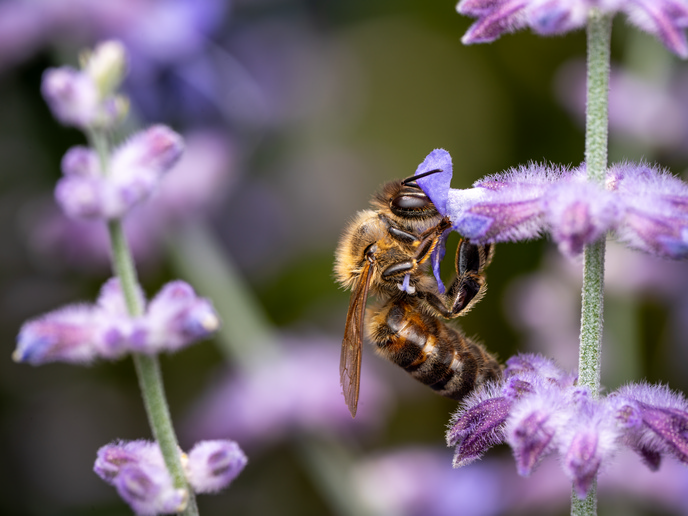
Honeybees offer us far more than just honey. They are an essential element in modern agriculture, including the production of almonds, squash, apples, cherries, plums, cucumbers, rapeseed, avocados and more. Every year, hives containing millions of bees are shuttled from farm to farm, where the tiny workers inside are tasked with pollinating nearby flowers to ensure a good crop. “In these systems, honeybees are treated as an input, just like fertilisers or water,” says Clough, an ecologist at the Department of Earth and Environmental Sciences at Lund University in Sweden. These diligent pollinators are under threat from a range of overlapping environmental stresses, from pesticides to disease, that can drive their colonies to collapse. Does that mean our ecosystems are similarly under threat? Not quite, says Clough. “If we can't maintain commercial honeybee colonies, I think there would be at least partial substitution by wild pollinators,” he says. This could be some of the estimated 25,000 or so species of wild bee, or hoverflies, beetles, butterflies, even wasps. “There are lots of wasp species with different ecological functions that visit flowers to gather nectar.”
How wild pollinators can help
Wild pollinators may be plentiful, but the ecosystem is a complex network of plants and pollinators, with many overlooked interactions. “You don't have one pollinator species going for one particular flower,” explains Clough. “They will happily switch between species.” There is increasing interest in wild pollinators among farmers, and many are looking into how to improve their land to create natural habitats for these species. “If you manage your landscape in a pollinator-friendly way, you also have other co-benefits,” says Clough. These can include minimising the runoff of excess nutrients into rivers, and creating habitats for predatory species that naturally keep agricultural pests in check. Through the EU-funded DrivenByPollinators project, Clough and his colleagues investigated the broader potential impacts of pollinator decline on wild plants and ecosystems. Their early analysis found that the loss of pollinators could reshape the composition of plants making up Europe’s grasslands. “Our work implies that ensuring resources for pollinators will also help contribute to wider nature conservation and restoration goals, which are often tied to the composition of the vegetation,” says Clough.
Send in the drones?
If all else fails, could we replace bees with tiny robots? “I think there's no reason why one couldn't pollinate a very high value crop with this right now,” says Clough. But he cautions that the economics might not stack up for many plants. “The quantities of honeybees in commercial apiaries are gigantic, so we're looking at astronomical numbers of mini drones.” So perhaps, instead of searching for replacements, we should support our existing essential workers as best we can. Find out more about Yann Clough’s research: The broader fallout from the decline in pollinators