Study presents discouraging picture of dwindling European birds and butterflies

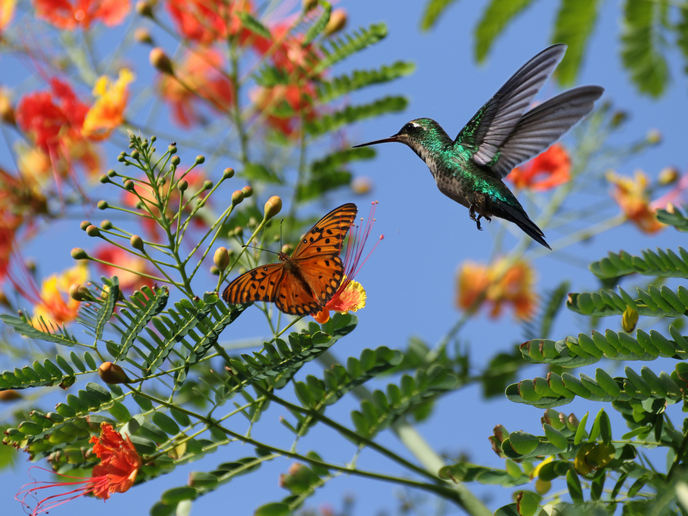
A landmark study(opens in new window) supported by the EU-funded BioAgora(opens in new window), eco2adapt(opens in new window) and wildE(opens in new window) projects has put Europe’s current conservation ambitions to the test. Published in the journal ‘Nature Ecology & Evolution’, the study takes a look at how three drivers – climate, land use and land-use intensity – are affecting common bird and butterfly species across Europe. The EU has had conservation policies aimed at protecting its natural heritage in place for decades. Although these measures have eased some direct pressures on wildlife, they have mostly prioritised species already classified as threatened, devoting less attention to the broader ecological processes that sustain biodiversity across different landscapes. Common birds and butterflies, despite the critical role they play as pollinators, pest controllers and seed dispersers, remain largely absent from targeted protection schemes. Yet, these species are among the most sensitive barometers of environmental health, and their ongoing decline not only weakens the ecosystems they support but also raises the concern that they too may soon join the ranks of the threatened.
A continent-wide assessment
Focusing on the period between 2000 and 2021, the study analyses the effects of climate, land use and land-use intensity on 265 common bird species and 144 common butterfly species from more than 20 000 sites across 27 European countries. The species were modelled under alternative land-use futures based on the IPBES Nature Futures Framework(opens in new window) – Nature for Nature, Nature for Society and Nature as Culture – combined with the most sustainability-oriented climate and socio-economic pathway, the ‘green road’(opens in new window). These scenarios project potential changes in common diversity across Europe up to 2050. The findings are stark. As reported in a ‘EurekAlert!’ news release(opens in new window), “none of the conservation scenarios assessed is sufficient to halt, let alone reverse, the projected decline in the average abundance of common bird and butterfly species. This remains true even under the most biodiversity-friendly scenarios incorporating key EU policies.” Farmland birds stand out as the most vulnerable groups, with their numbers projected to fall sharply in most scenarios. Grassland butterflies face dual pressures: agricultural intensification and land abandonment, both of which erode their habitat. Rising temperatures compound the problem, most strongly affecting butterfly populations. Forest species, by contrast, show some resilience, helped in part by gradual increases in forest area – though, even here, the spread of intensive forestry practices continues to grow even in conservation-minded scenarios. Geographically, the picture is uneven. Western and northern Europe stand to gain the most from conservation-oriented policies, while eastern and southern regions see far less benefit owing to increasing agricultural pressures. The study supported by BioAgora (Bio Knowledge Agora: Developing the Science Service for European Research and Biodiversity Policymaking), eco2adapt (Ecosystem-based Adaptation and Changemaking to Shape, Protect and Maintain the Resilience of Tomorrow’s Forests), and wildE (Climate-smart rewilding: ecological restoration for climate change mitigation, adaptation and biodiversity support in Europe) highlights the fact that current conservation policies mainly focus on how land is used, without confronting the matter of society’s growing demand for food and timber production. These policies may therefore not be enough to secure Europe’s future biodiversity. To safeguard the future, Europe needs bolder, more integrated strategies that aim not merely to slow biodiversity loss but to actively reverse it. For more information, please see: BioAgora project website(opens in new window) eco2adapt project website(opens in new window) wildE project website(opens in new window)