Eruptive instrumentation for volcanic monitoring

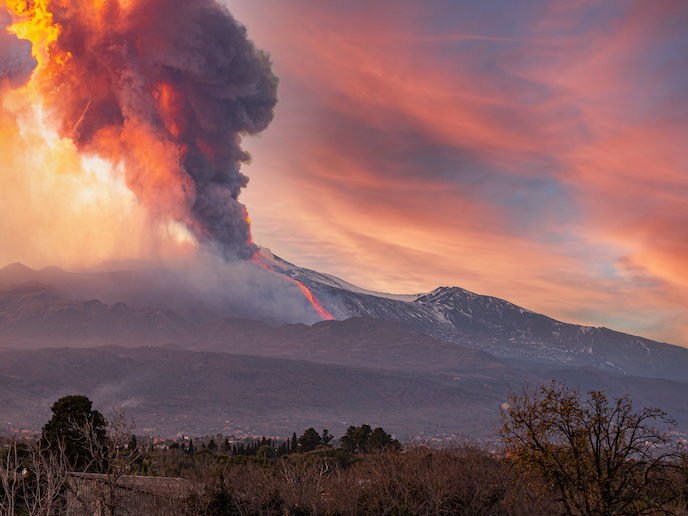
The MULTIMO project aimed at developing an advanced system for forecasting volcanic eruptions. This approach is based on the design of improved volcano monitoring techniques and the consecutive integration of the acquired multi-parameter data sets with modelling procedures. Geostatistical methods are applied for the analysis of time series of integrated data recorded at active volcanoes and then compared with the predictions of dynamical models in order to improve the reliability of the forecasts. Volcanoes emit gases, originating from underground magma, to the atmosphere. The measurement of sulphur dioxide fluxes is of primary importance for the volcanic hazard assessment. The emissions of sulphur dioxide are measured in the plume by a correlation spectrometer (COSPEC), an instrument which measures the amount of solar ultraviolet light absorbed by sulphur dioxide in the plume and compares it with an internal standard. Under MULTIMO, a differential optical absorption spectrometer for measurements of sulphur dioxide emissions was developed and employed. The Differential Optical Absorption Spectrometry (DOAS) is similar to COSPEC in that it also measures the amount of UV radiation transmitted though the plume in order to establish gas concentration. However it is capable of measuring all of the gases emitted in a volcanic plume and at the same time it allows for a miniaturised spectrometer. In addition the simplicity of the optical parts and the ease for automation and data telemetry are only a few of its advantages. The methodology allows high time resolution and high spatial resolution measurements of volcanic plumes, making the correlation of geochemical datastreams with results from geodesy and seismology a routine procedure. As gas emissions are important for understanding the potential volcanic activity and human health hazards, the new techniques and tools that MULTIMO introduces is sure to bring significant benefits to the field.