



Preserving Nabatean mortars

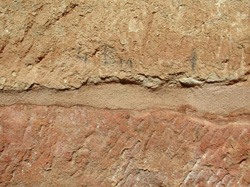
Understanding ancient building techniques is crucial for the conservation management of historical sites. Mortar is a historical construction material that is of particular interest. This is because of its broad area of application, its sensitivity to weathering effects and the fact that it is frequently found. Obtaining detailed knowledge of the historical working techniques offers suitable restoration as well as new historical insights into the skills of the builders. The NAMO project examines ancient mortars specifically from the Nabatean period in Jordan and Syria. The Nabateans were famous for their rock carved facades in Petra; however, until now, the mortars they employed for free-standing structures have been examined to a lesser degree. The monuments of Qasr al Bint in Petra, Jordan and of the Great Cathedral in Bosra, Syria have been chosen as reference sites for studying Nabatean technology with respect to the use of mortars. The Nabatean advanced building technology is exemplified through their use of various kinds of binding media and different types of aggregates and admixtures according to the purpose of the mortar. For example, gypsum and/or lime were used at Qasr al Bint and limestone, basalt, pumice and fibres were used for the Great Cathedral in Bosra. The biggest danger to these ancient materials comes from soluble salts that are transmitted into the wall as a result of rising moisture or wind deposits. Through mapping and testing spatial information of the various materials and of the damages to the building may be provided. This information may be of particular use to archaeologists in order to distinguish various construction periods as well as to interested institutions and/or restorers working toward a preservation concept. Furthermore, the significance and potential of the historical working techniques will be presented to may also benefit the cultural heritage administration and craftsmen firms in the Mediterranean partner countries.