


Busquin hears 'Green' response to FP6
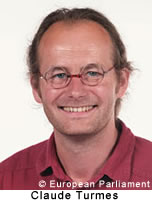
Research Commissioner Philippe Busquin highlighted the role of the next European R&D Framework Programme (FP6) in tackling environmental issues at the Greens/European Free Alliance (EFA) Research Forum on June 6 2001. Speaking at the event, held at the European Parliament in Brussels, Commissioner Busquin said: 'Research is indispensable to environmental policy and to Europe's sustainable development strategy. To tackle the political challenge of an ambitious strategy, we must carry out more and more research and continue to build our knowledge. Only a truly European research area, well-established and organised, can ensure such progress.' Busquin highlighted the widening remit of environmental research, stressing the need to integrate purely scientific research with an examination of social and economic factors: 'The contribution which research can make to the environment today goes far beyond the traditional concept of the environment. Huge planetary changes, such as climate change and stratospheric ozone, the relationship between the environment and health and...the concept of sustainable development, now all play a part in such research.' Commissioner Busquin said climate change and sustainable development will be key priorities of the next Framework programme (FP6), with further research on the precise mechanisms of global climate change, its impact on the natural world and on human activity, strategies to reduce greenhouse gas emissions and the social and economic impact of climate change. Some of those who spoke at the forum, however, expressed dissatisfaction with current progress on environmental issues and with FP6 priorities in this area. Energy proved to be a hot topic at the event, with Luxembourg MEP Claude Turmes calling for a realignment of energy research priorities under FP6. Turmes highlighted what he called a 'profound imbalance' between the funding allocated to nuclear and renewable energy research. He said that despite continuing problems with the disposal of nuclear waste and the need to find alternatives to finite resources such as coal, renewable energy will receive less than half the funding allocated to nuclear research under FP6. Turmes condemned nuclear energy as a failure, saying it accounts for only five to seven per cent of energy consumption. He said that renewable energy funding should at the very least be equal to that allocated to nuclear energy research. Turmes also called for further research into the effects of radiation and radioactive sediments on a wide variety of organisms and ecosystems, a concern echoed by Irish MEP Nuala Aherne. Both Aherne and Turmes also called for research into the effect of weak doses of radiation on human health. French MEP Didier-Claude Rod also spoke on the link between environmental factors and human disease, saying that further study was necessary to determine the role of pollutants, pesticides and other toxins in the recent increase in allergies, respiratory problems and certain types of cancer. Mae-Wan Ho, of the UK's Institute of Science in Society, argued the case for a whole new approach to medical research, labelling the human genome project a 'white elephant'. Ms Ho said that the reductionist approach of traditional science, in particular the concept of a fixed genetic code, is flawed. She argued instead that the human genome is a fluid entity which adapts to different environmental factors, and called for a change of focus from genetic determinism to a more holistic approach to human disease, taking environmental factors such as pesticides, tobacco smoke and diet into account. Ho argued that a false emphasis on genetic research is being fuelled by commercial genetic engineering, which sees greater potential 'profitability' in conditions such as cancer and diabetes, which are more likely to be triggered by environmental rather than genetic factors, in comparison to research on rare, purely genetic conditions. Jean-Pierre Berlan, Research Director at the French Institute for Agronomy Research (INRA) in France, also spoke out on the issue, calling for greater legal intervention to prevent crucial medical and agricultural genetic information from falling under the control of international cartels through patenting. Berlan warned of the slippery slope from non-commercial to commercial globalisation, where only the rights of large private groups are protected. Berlan cited as an example the case of the so-called 'terminator' gene patented in America in 1998. The patented technique allows plant sterilisation through the control of gene expression, thereby paving the way for a potential monopoly on agricultural production.