


Biotech conference calls for moves to conquer European research 'paradox'
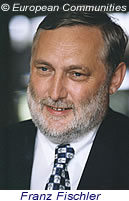
A conference on 'Life sciences and biotechnology - a strategic vision,' held in Brussels on the 27 and 28 September, concluded that urgent action is needed to transfer cutting edge European biotechnology research into economic progress and solve the 'European paradox' of good quality research with little commercial exploitation of results. The event also gave an insight into the effects of the ethical and public perception elements of developing biotechnology. Reporting on the conference's 'Potential and research' workshop, DG Research director Bruno Hansen said that while EU biotechnology research was making good progress, 'it looks as if we are less good at transferring research into practice.' He said the EU must move swiftly to catch up with the US in the area of competitiveness by improving networking and compatibility between Member States and enhancing the EU skills base. He also called for action to raise awareness of commercialisation, address ethical issues early and enhance public understanding in order to boost biotechnology innovation. Christian Siebert, deputy head of DG Enterprise's 'biotechnology and competitiveness in pharmaceuticals' unit, also spoke on the need to maximise the economic potential of EU biotech research. Reporting on the conference's 'Innovation and competitiveness' workshop, he said: 'Innovation is often not reaching the commercial market', and said fragmentation between academia and industry, between disciplines and between national research programmes was to blame. He stressed the need for Europeans to recognise that 'innovation is not a one-off event, but a chain' and called for action to strengthen links between education, research and innovation. He said that to achieve this, the centres of excellence proposed under the next RTD Framework Programme, FP6, were essential, along with initiatives to support the commercial exploitation of research results, such as technology transfer programmes and business incubators. Research Commissioner Philippe Busquin also spoke on the issue of innovation, emphasising that biotechnology is a key element in achieving the goal set out at the March 2000 Lisbon summit of making Europe the most competitive knowledge-based economy in the world. He said the EU must act fast in order not to 'miss the boat,' highlighting the human genome project as an example of the kind of 'critical mass' in biotechnology which could be generated by the large-scale, integrated projects of the proposed European Research Area (ERA). Speaking at the concluding session, Agriculture Commissioner Franz Fischler also said that a 'proactive' approach to biotechnology was needed as 'Europe cannot miss the opportunities biotechnology offers.' He stressed that consumer confidence must be won through proper information and regulation on the use of biotechnology in the agri-food sector. He said that farmers must, however, take the initiative in developing an approach to biotechnology issues or 'live with policies designed by others.' Reporting on the 'Regulation and governance' workshop, DG Health and Consumer Protection director Paula Testori Coggi said that while Commission proposals for the labelling of GM food and feed were essential to maintaining public confidence, 'scientists in the risk assessment process must be and appear to be independent.' She added that a lot would therefore be expected of the future European Food Authority in its GM safety assessment role under the new legislation. Ms Coggi added that some workshop participants had expressed concern that the new labelling scheme would reduce consumer choice as the negative impact of the GM label on a product would stop retailers from stocking it in the first place. Reporting on the workshop on 'Public perception and ethical implications,' Commission deputy secretary general Bernhard Zepter said that some delegates had also voiced concern on the issue, saying that GM labelling could lead to outright rejection of such products. Mr Zepter also said that the public perception of biotechnological developments was divided. He said that the use of biotechnology for pharmaceutical purposes tended to cause fewer problems with the general public, while the use of biotechnology in 'green' areas such as agriculture and food was often less acceptable to the public. Reporting on the discussion of ethical issues in biotechnology, Mr Zepter said that biotechnology advancements such as stem cell research and advances in diagnosis of genetic defects must not encroach upon human dignity and freedom. He also reported a call by Environment Commissioner Margot Wallström for recognition of the limitations of scientific research in this area, saying it was important for research to accept self-limitation on the basis of sound evidence. Luxembourg MEP Robert Goebbels, chair of the European Parliament's temporary committee on human genetics, also spoke on the issue of ethics, saying that 'freedom of research, like all freedoms, is not absolute.' He added, however, that the European Union had a duty to encourage research in biotechnology and human genetics because of the huge medical benefits it could bring. He called for a specific EU budget for publicly-supervised stem cell research, saying 'only research ending in human cloning should be prohibited at EU level.' Mr Goebbels also said that the ethical issues attached to stem cell research could not be resolved by reference to any sort of universal moral code. 'There is no natural morality,' he said. 'Sometimes nature is generous, sometimes she is cruel. Man has to act on the basis of freedom.' Commissioner Busquin said that international collaboration, such as the proposed European Research Area, was crucial in dealing with the ethical issues involved in biotechnology research. He said individual nation states could not decide ethical questions alone, as the issues transcended national boundaries. He added that the 'European dimension' of science is now 'more important than ever' in clarifying the debate. The concluding session also saw further discussion of the question of what session chair Lord Selborne, of the UK House of Lords, termed the 'democratisation of knowledge.' He said 'impact of biotechnology will be global' and so decision-makers are ultimately responsible not only to the EU and its Member States, but ultimately to 'all of humanity.' The stakeholder conference was part of a broad public consultation launched by the European Commission in preparation for the broad policy paper in biotechnology and life sciences, covering the next decade and beyond, which it intends to present by the end of the year.