


SME finance forum focuses on private and public support
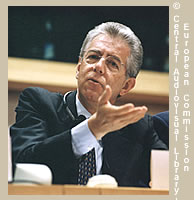
EU Competition Commissioner Mario Monti endorsed the role of the EU's 'social economy' model in providing financial support to SMEs (small and medium sized enterprises) but conceded that more help is needed, speaking at the 'Financing SMEs: the European approach' Belgian presidency event in Louvain-la-Neuve, Belgium, on 25 October. Mr Monti explained that the social economy model is 'different from a pure belief in the market economy - we also believe in regulation if there are interests to be protected.' He added that state aid remains an important element of SME support in Europe. 'It would not be a good idea to scrap all state aid for SMEs,' he said. 'There are certain sectors, such as agriculture, where there are a large number of SMEs and removal of state aid would cause big problems.' although 'a better balance still has to be found between governments, state aid and the market place.' His comments were, in part, a response to the points raised by Nasdaq President, Hardwick Simmons, who offered advice to the EU on boosting market conditions for SMEs. The principle of 'one market, one regulator is very important' and that the EU has 'got to be able to draw on the full pool of European equity.' He added: 'Don't think vertically, think horizontally: think choice.' He claimed that the idea that smaller companies need less regulation was wrong, and said that tax policy is critical as it determines risk tolerance and the amount of liquidity in the market. He continued that the USA's financial strength lies in the fact it has 'opted to have markets control markets,' and that Americans have also benefited from a culture which attaches less stigma to business failure: 'There isn't a penalty for losing in the United States.' While Mr Monti agreed with Mr Simmon's analysis that the 'market knows best' and admitted that the EU 'is lagging behind the US,' he felt that 'the EU institutions still have a role to play.' Peter Praet, director of the National Bank of Belgium, said that SMEs have always had to struggle to obtain financing, and so current debate should focus on whether or not it has become more difficult for them to find this support in recent years. He also countered Mr Simmons' claims, saying: 'The US has to be critical of its own system as well as coming here and giving lessons,' even if those lessons could be valuable to Europe. UNICE president Luc Clarys spoke of his experience in gaining funding as an entrepreneur in the textiles industry. He said that conditions have become more difficult for businesses looking for financing, especially start-up companies, which are facing 'huge problems.' He emphasised that 'we don't expect subsidies' but said mechanisms are needed to reduce risks for private investors. He called for governments and the EU could reinforce guarantee schemes to help SMEs, and provide alternatives to entrepreneur's personal guarantees. He also said that the introduction of government fiscal incentives, such as tax exemption for profits which are to be used for future investments, would help SMEs to find their footing. Mr Clarys also said he was concerned about the possible impact of the Basle II accord which is due to be introduced in 2005. He said that the standardised capital adequacy framework which is currently envisaged by the proposals could disadvantage SMEs by lowering their credit rating through lack of equity. He called on the Union to make moves to ease the impact of the new Basle II accord on SMEs, warning that if action was not taken the accords could undermine the competitiveness of Europe's SMEs. 'Ease those conditions and give us more time to adapt,' he said. Portuguese Secretary of State for Industry, commerce and services, Fernando Ribeiro Mendes, said that his country is 'trying to bring down gradually the state aid to SMEs,' and warned against the 'risk of creating hospitals for business casualties.' He said that Portugal is working closely with the Business Angels network of informal investors, which he said are an important alternative to the family networks which traditionally finance SMEs.
Kraje
Belgium