


Research Council adopts first phase of GMES action plan 'in principle'
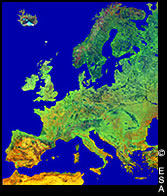
The first phase of the European Commission's action plan for the GMES (global monitoring for environment and security) initiative was given the green light by EU research ministers at the European Research Council in Luxembourg on 30 October, on condition that the meaning of the word 'security' is given a clearer definition. A spokesperson for Commissioner Busquin said that the action plan was approved 'in principle' by the Council, on condition that a clearer definition is provided of the 'security' aspects of the initiative. The spokesperson added that full approval for the plan is expected at a meeting of Coreper (committee of permanent representatives) on 7 November. A spokesperson for the Research Council president, François-Xavier de Donnea, said that Mr de Donnea was pleased with the wide support given to the initiative and remains hopeful that the GMES plan will be adopted in time for the ESA Council meeting in Edinburgh on 14 and 15 November. EU Research Commissioner Philippe Busquin, who presented the action plan along with Environment Commissioner Margot Wallström, welcomed the provisional adoption of the plan: 'We have first-rate scientific expertise and space technologies in Europe. We must put them to greater and better use to meet the challenges of our globalised society.' Mr Busquin said that the 'strategic importance' of the GMES programme extends beyond space research 'since it aims both to obtain accurate and reliable information on the state of our Earth and to monitor our environment in the wider sense.' Commissioner Wallström said: 'I welcome this initiative which will underpin environment policy. What interests me specifically is having powerful measurement instruments for monitoring application of international conventions such as the Kyoto protocol on climate change.' Under the GMES programme, Earth observation satellites will be combined with data collected by ground level sensors. The information will be used to support action in a variety of EU policy areas, including climate change, sustainable development, civil protection, humanitarian aid and scientific research. A number of environmental applications have been prioritised for the GMES project. These include the management of natural disasters such as floods, earthquakes and volcanic eruptions, global monitoring of the oceans, vegetation and the atmosphere and support for regional development aid. GMES satellite observation will also have several security applications, including measuring refugee movements, optimising the provision of food aid and providing support to peace-keeping troops outside of Europe. Ways of using GMES to help detect terrorist acts such as chemical or biological attacks will also be examined. One specific feature of the GMES initiative is the geographical range which it will provide - the programme is global in scope, with satellites placed in both geostationary and mobile orbit to provide worldwide cover. The action plan follows a strategic working paper drawn up by the Commission and the ESA in June 2001. GMES, which will be one of the priorities of the next European RTD framework programme, will be jointly financed by the European Commission and the ESA. Russia and Canada have also expressed an interest in linking up with the GMES project.