


Companies and academia making moves to form ERA
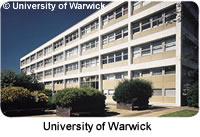
Companies and academic institutions are helping to create the proposed European research area (ERA) with an increasing number of high level link ups. Dutch electronics company Philips and the US-owned Ford motor company in the UK have recently had divisions announce new partnerships with academic institutes. In the UK, the Warwick manufacturing group (WMG) at the university of Warwick has signed a memorandum of understanding with the Ford-owned Premier automotive group (PAG) which will see a multi-million pound collaboration between the two in the areas of research, training and supply chain. PAG specialises in prestige car makes, such as Aston Martin, Jaguar and Land Rover. 'You could say this was a good example of the ERA in action,' said WMG spokesperson Nick Matthews. The collaboration will be international, with participation of companies from other European countries in addition to the two sets of researchers. Some of the research will be carried out in the framework of existing research programmes. While most of the funding will come from PAG, as the results will largely benefit its products, the WMG has not discounted European funded programmes and has participated in these in the past. 'There are lessons to be learnt from this sort of initiative,' said Mr Matthews. 'We found this easy to set up, but if it so easy, why are we the only ones doing it?' he said, indicating that a more adventurous attitude to these sort of link ups is required. He added that while universities should not just be seen as institutes who solve industry's problems, there is a case for making part of universities dedicated to dealing with industrial development. 'The WMG was set up 21 years ago because a report at the time indicated that engineers leaving universities were as useful as ashtrays on motorbikes, because they needed so much retraining once they entered the private sector. What we are trying to do is join the business sense of the PAG and the skills of the engineers.' The PAG welcomed the initiative as a massive step forward. The collaboration will help the company to reach its goal of producing 800,000 vehicles a year, according to its Chief Executive Officer, Dr Wolfgang Reitzle. 'The university of Warwick is one of the country's finest centres of excellence and as such we look forward to sharing innovative technology and building on the achievements of both parties,' he said. Philips research in Eindhoven, the Netherlands has asked the Dutch Delft institute of micro-electronics and submicron technology (DIMES) to host the bipolar compact model MEXTRAM, should the model be accepted by compact modelling council (CMC) as the standard bipolar compact model. The CMC is due to select the standard from two shortlisted candidates soon, but the model needs to be centred at a neutral site, hence the selection of DIMES. The final model will allow for design optimisation, meaning even the largest integrated circuits will be able to manufactured accurately first time, thereby cutting the length of design cycles.