


Liikanen says e-commerce strategy is still key, despite end of dot-com boom
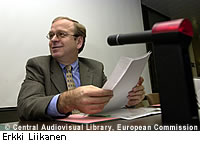
EU Enterprise Commissioner Erkki Liikanen has said that the Commission's eEurope strategy still has a vital role to play in developing a knowledge-based European society despite the bursting of the dot-com bubble. Speaking on 'eEurope: challenges and opportunities' at a European-American Business Council in Washington, USA, on 19 November, Mr Liikanen said that despite the new conditions, the new economy and the eEurope strategy set out at the Lisbon summit in March 2000 are not 'history.' He said that 'the new economy is a new model that concerns the entire economy' so that 'while the hype may be over...this integration of the old and the new economy goes on' as a growing and diverse range of companies are continuing to turn to the Internet. He added that as this integration between the old and new economies takes shape, it will aid 'the shift towards a networked and knowledge-based economy,' creating a system 'where an ever-increasing number of individuals and businesses get connected.' He pointed to the continued growth of Internet use in European homes and figures showing that the percentage of regular users is approaching an EU average of 40 per cent. Mr Liikanen was keen to emphasise, however, the importance of clear long-term public policy objectives. 'Investors are influenced by stock markets,' he said, 'but public policy must not fluctuate with share prices.' He said clear government policy is needed to continue the liberalisation of the telecoms market, accelerate e-commerce, tackle cybersecurity issues, promote quality content and 'bridge the digital divide' by ensuring skills for all. Commissioner Liikanen also outlined specific measures adopted by the European Union to promote the development of European e-commerce. These include measures such as the Go Digital initiative to help SMEs to exploit e-commerce opportunities and the creation of a 'dot-eu' domain name. The introduction of the euro in 12 EU Member States will help to create major new cross-border opportunities for e-commerce as 'the price transparency that the euro will generate coupled with the Internet will surely increase competition and economic dynamics,' said Mr Liikanen There remain, however, several areas where further effort is needed to boost European e-commerce, according to Commissioner Liikanen. Explaining that 'services are what make the user tick, and the thrill is in the content,' he said that the creation of an inclusive information society is dependent on diverse, multi-lingual content which matches cultural demands. Mr Liikanen said that EU governments can play a major role in content development through the digitisation of public content and the provision of high-quality online services. He emphasised, however, that 'what is still missing is real interactivity, which is the essence of the Net,' and which will drive reform of public services by setting new standards of responsiveness, citizen-friendliness and quality of service. Mr Liikanen added that it is important that all people have access to and the ability to use the Internet. He said women, the elderly, the poorly educated and those living in rural areas are still disadvantaged in Internet take-up. While the process of improving accessibility must start at school, work is also needed to promote new skills amongst those already on the job market and to help them adapt to fast-changing technologies.