


Liikanen highlights that much remains to be done in EU telecommunications sector
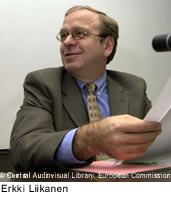
Much progress has been made in pushing through innovative new measures in the European Union, but obstacles and the slow pace of reform remain a problem, according to EU Enterprise and Information society Commissioner, Erkki Liikanen. Speaking at the European communications conference in London on 14 February, Mr Liikanen said that the present telecommunication reforms had helped to benchmark Member State progress, had accelerated the decision making process in key areas and put the Internet at the top of Member States' political agenda. But some of the key areas that need to be addressed, such as broadband access and the unbundling of the local loop have yet to make the kind of progress desired, he said. Speaking about the unbundling of the local loop, Mr Liikanen said that 'overall progress remains too slow'. He added that full unbundling is not a reality in most Member States and that the Commission is committed to keeping an eye on this area. He pointed to the level of broadband access in the EU (around 15 per cent of Internet homes have it) and said; 'Europe will not become a fully fledged knowledge-based economy until the generalisation of broadband.' Prices have improved, but 'the differences in supply times between Member States are also difficult to explain'. Competition will help the development of the sector. 'But we must do more,' said Mr Liikanen. 'We must ensure that our strategies can adapt quickly to the changing environment of both markets and technologies and see to it that convergence results in more choice rather than less, in greater competition rather than greater concentration of control.' There has been major progress achieved however, such as the reduction of red tape for new market entrants, standardisation of transmission structures and increased flexibility in the new framework. Mr Liikanen also highlighted that a new framework for radio spectrum policy had been established, which would provide more coordination in areas such as the licensing of 3G (third generation) mobile networks. The major areas which now need to be addressed, according to the Commissioner, are how to complete the transition to a dynamic and competitive telecommunications market and how doing this could contribute to developing eEurope.