


Pan European space incubator network launched
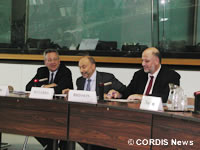
A new European space incubator network (ESINET), which will create links between national and regional space incubators across the EU and in the EU's candidate countries, was launched in Brussels on 17 July. The network involves incubators from 12 European countries, 10 EU Member States as well as Bulgaria and Ukraine. 'This is good news for small businesses in the space industry,' said EU Research Commissioner Philippe Busquin, welcoming the launch. 'European SMEs [small and medium sized enterprises] are uniquely well positioned to turn innovative research ideas into successful commercial products. [...] Networking initiatives such as ESINET are part of our effort to build a critical mass of scientific and technological excellence at EU level in order to create a true European research area,' he said. Florence Ghiron, from Wallonia space logistics S.A. in Belgium, emphasised what individual space incubators have to gain from joining such a network. 'What we expect is an international springboard. We hope to speed up the access of start-ups to the international environment and to do this only in Wallonia would be crazy. We expect greater efficiency, the pooling of good practice, [...] joint lobbying and higher visibility. We hope to be able to create new companies, which we wouldn't be able to do only in Wallonia,' said Ms Ghiron. 'The three keywords should be focus, efficiency and openness,' added Franco Malerba, Italy's first astronaut and former MEP and Chairman of ESINET's advisory board. One of the criteria for success will be the proportion of companies belonging to the ESINET incubators which receive EU funding through the forthcoming Sixth Framework programme (FP6). This is not the only criterion against which the network's success should be judged explained Pierre Brisson, head of technology transfer, promotion and assessment and the European space agency (ESA). Success should also be judged by access to different sources of funding, including private funds, and a rise in the birth rate of new enterprises, said Mr Brisson. A management board will coordinate the joint activities of the ESINET partners whilst serving as an interface between ESINET, the EU and ESA. A high level advisory board will be responsible for advising the management board on future strategies and will introduce new partners to the network. There are currently 18 partners, but Andrea Barbagelata from T4T, one of ESINET's founding partners, acknowledged that ESINET could support up to 30 partners, and maybe more. Space is also a strategic priority for the EU's Sixth Framework programme and will receive 1.075 billion euro in Community funding.