


Spring Council expresses renewed commitment to Lisbon agenda
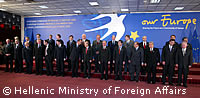
EU Heads of State and Government and their counterparts from the candidate countries restated their commitment to the Lisbon strategy at the Spring European Council meeting in Brussels on 20 and 21 March. The Summit conclusions outline measures to be taken in the areas of entrepreneurship and innovation, employment, the internal market and environmental protection, aimed at making Europe the world's most competitive knowledge-based economy by 2010. A key announcement was the creation of a European employment task force under the leadership of former Dutch Prime Minister Wim Kok. The task force is charged with examining the main issues relating to employment policy, with a view to proposing practical reform measures aimed at benefiting labour markets. The European Council also set deadlines for final agreement between Member States on areas of reform seen as crucial to the Lisbon process. These include railways, energy markets, the Single European Sky, financial markets, the information society, and liability for environmental damage and climate change. The importance of fostering enterprise and entrepreneurship was underlined by a commitment to actively participate in the consultation process surrounding the recent Green Paper on entrepreneurship. As a follow up to this, the Council called on the Commission to produce a European entrepreneurship action plan before the 2004 Spring Council meeting. Other enterprise friendly proposals include initiatives to foster entrepreneurship more actively within education systems, a call on Member States to speed up implementation of the European charter for small enterprises, and the removal of administrative burdens for small companies. In order to support innovation and build a knowledge-based economy, the key target identified by Europe's leaders was the boosting of private research investment in order to meet the Barcelona research expenditure objective of three per cent of GDP. In order to create the right environment for achieving the Barcelona target, the Council called for the creation of European technology platforms in areas such as plant genomics or hydrogen fuel technology, urged EU governments to strengthen the links between research and business, encouraged the creation of spin-offs and mobility of researchers, and highlighted the need for a better understanding of science in society. Member States also recognised the role that defence and security related research could play in promoting new technologies, thereby stimulating innovation. The Council announced its intention to analyse defence research in the EU with a view to the possible creation of an inter-governmental defence capabilities development and acquisition agency. Finally, Heads of State and Government reiterated the importance of the environmental pillar of the Lisbon strategy, and agreed to accelerate progress towards meeting the Kyoto Protocol targets. Specific measures include the reduction of greenhouse gas emissions, increases in the use of renewable energies, including specific targets of 12 per cent of primary energy needs and 22 per cent of electricity needs by 2010, and achieving a final agreement on the emissions trading Directive.
Kraje
Greece