


Commission launches political debate on increased support for basic research
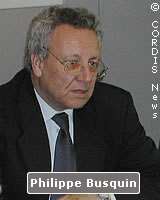
EU Research Commissioner Philippe Busquin moved the debate on European support for fundamental research into the political sphere on 15 January, presenting a Commission communication on 'Europe and basic research'. The document will provide the background for discussions within the European institutions on new forms of EU support for basic research, including the possible establishment of a European Research Council (ERC), said the Commissioner. 'Our ambition to build a knowledge based society and a European Research Area [ERA] requires a strong science base and high quality human capital. Basic research is the answer to both demands,' Mr Busquin said. In analysing the current status of basic research in both Europe and the US, the communication suggests that while the two partners display roughly the same level of commitment, Europe lags significantly behind the US in relation to scientific journal references, a good indicator of the quality of the research. The Commissioner argues that this is the result of a lack of competition within Europe, where most basic research is carried out at national level. 'The answer is to put the best teams in competition with each other at European level,' he stressed. Having acknowledged that the situation calls for a European response, the communication argues that an EU support mechanism for individual research projects should be introduced, modelled on the US national science foundation's 'individual grants' scheme. Such a move 'seems quite natural in the context of the European Research Area,' according to the Commission. The support structure for basic research would necessarily differ from that of the current research Framework Programmes, which is consortia based, said Mr Busquin. The work programmes and scientific priorities, for example, would be far more open than in the case of targeted research. However, at this stage the Commission does not see why the new mechanism should be exclusively limited to basic research. 'In the case of applied research too, support for individual teams' projects could and must be envisaged,' reads the communication. The Commission also accepts that in order to make an impact, the new programme would have to be supported by 'a significant volume of fresh funding' from the Union's research budget. When pressed on whether he supported the two billion euro per year budget recommended in the recent ERC expert group report, Mr Busquin argued that the most important priority is to put an effective structure in place without creating too much unnecessary bureaucracy, and that an initial annual budget of around 500 million euro would be more realistic. With the political debate on European support for basic research now officially underway, a timetable has been set out for achieving concrete proposals. Following the conclusion of the debate within the institutions and the wider scientific community within the first quarter of 2004, the Commission will submit a second communication during the second quarter aimed at translating those conclusions into structures and mechanisms. The process of reaching a political agreement on these proposals will begin in the second half of 2004, under the Dutch Presidency, with a view to establishing the proposals in time for the Seventh Framework Programme.