


First Galileo satellites to be launched in 2005
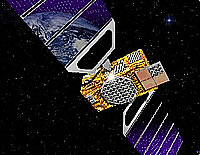
The European Union took a step towards making its satellite navigation system a reality on 10 December when ministers at the Transport Council approved a move to the construction phase of the project. 'This constitutes a decision of great European significance,' said chair of the Council and Dutch Minister for Transport, Public Works and Water Management, Karla Peijs. 'Navigation by satellite is increasing in importance. European citizens and businesses are increasingly becoming involved with satellite location technologies, such as in cars. For many sectors, precise determination of time is even more important. With Galileo, Europe will be ready for this future.' The first satellites will be launched at the end of 2005, following a naming ceremony in the Netherlands during the summer. Ministers confirmed that Galileo will offer the following services: an open service; a commercial service; a safety of life service; a search and rescue service; and a governmental service, to be known as the 'public regulated service' (PRS). Use of the governmental service by the Member States will be optional, and those choosing to make use of it will meet the operational costs on a non-commercial basis. The Council also agreed on a number of conditions that must be satisfied before the project moves ahead. The clauses are mainly financial in nature, and state that the costs must not become too great, and that a fair division of public-private funding must be ensured. Ministers also invited the Commission, together with other stakeholders, to 'implement an aggressive strategy aiming at maximising the potential revenues, in particular those to be generated from the intellectual property rights acquired during the different phases of the programme, while aiming at a broad use of the system.' Exploitation costs are estimated at 220 million euro a year, and an exceptional contribution of 500 million euro from the public sector in the first few years of operation will help to cover them. From then on, costs will be covered entirely by the private sector. 'Galileo is without a doubt the most wonderful European technological project. We are now on the home straight,' said EU Transport Commissioner Jacques Barrot. 'Galileo will be as much of a technological revolution as mobile telephony. This venture shows how capable Europe is of making a united effort in pursuit of a common goal.'