Rhodium catalyst produces more hydrogen

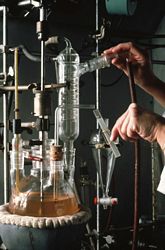
Catalysts work chemical magic by increasing the rate of reaction. They play key roles in a number of industrial applications. Chemists from the University of Cyprus with extensive experience in catalyst development set their sights on phenol reformation and hydrogen gas production from biomass conversion. The university researchers moved beyond traditional nickel catalysts and experimented with rhodium-based catalysts. Furthermore, the catalyst was formed using the sol-gel technique, which transforms liquid constituents into solid form, as opposed to the more conventional process of wet impregnation. The Cypriots put the new rhodium catalyst to the test, converting feed gas containing 0.5% phenol over a broad temperature range (575-730 degrees Celsius). Amazingly, the rhodium catalyst was able to produce 50 times more hydrogen than its commercial nickel counterpart. In particular, it outperformed the nickel catalyst at low temperatures. Furthermore, the rhodium catalyst was able to maintain nearly constant rates of hydrogen production across the entire temperature spectrum. Its performance was also extremely stable over time. Based on these very positive results, the University of Cyprus is pursuing a patent for the new catalyst.