Assessing air quality in Madrid

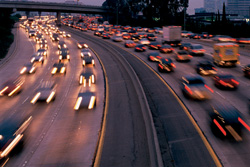
Significant reductions in vehicle-generated emissions have been secured for gaseous pollutants by using catalytic converters, reformulated fuels and improved engine technology. Despite these improvements, however, there will be difficulties in achieving the legally binding targets set by the European Union for seven air pollutants, including NO2 and PM10, in the foreseeable future. These targets require local authorities to monitor, control and take, if necessary, measures in order to reduce air pollution levels. With regard to monitoring, there are widespread air quality stations in the city of Madrid which cover the entire urban area. These are controlled and managed by the Environmental Quality Department of the City Council. Researchers at the Technical University of Madrid selected three monitoring station types, namely street canyon, open road and urban background. In addition to the air pollution measurements, data has been collected for traffic characteristics. Meteorological parameters, particularly wind speed and direction, temperature, pressure and precipitation, have also been recorded. In the period 2003-2004, the threshold values for NO2 based on European Union Directives were exceeded mainly in congested central city roads and along the ring roads surrounding the city. The highest annual mean concentrations of PM10 were observed in congested traffic environments, located in commercial and residential areas. Moreover, excessiveness of limit values was also observed at the background monitoring stations. It was thus assumed that particulate matter originates not only from combustion processes and non-combustion vehicular sources, but also from mechanical wear of street surfaces. Generally, the temporal variation of concentrations of primary pollutants, such as PM10, CO2 and NOx, which mainly originate from local traffic, correlate with the diurnal variation of traffic flow. Furthermore, less dense traffic levels, and better re-suspension and dispersion conditions trigger the lowest levels of air pollutant concentrations in the summer months. Datasets generated from this campaign will support the OSCAR project in the development and evaluation of an assessment system for estimating the environmental impact of road traffic to urban air quality. Future research will focus on producing modelling tools for identifying suitable impact reduction options.