Evaluating the desertification risk in Europe

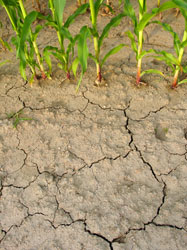
Desertification is a growing environmental problem. Changes in land use, frequently related to agricultural and/or livestock activities, can undermine biodiversity and in the end render the soil infertile. Several regions, particularly in countries bordering the Mediterranean Sea, are increasingly susceptible to this phenomenon. Modellers with the University of Newcastle upon Tyne helped develop the SHETRAN Decision Support System (DSS) during the MEDACTION 4 project. The heart of the DSS is the SHETRAN river basin model developed at the university's Water Resource Systems Research Laboratory. The DSS couples SHETRAN with the EPIC (Erosion productivity impact calculator) crop growth model and a farmer response model that predicts what crops farmers plant in order to be profitable. The DSS was tested for two different regions in the Mediterranean covering several hundred square kilometres. Initially, a baseline was established with data from the 1980s and 1990s. The DSS was then used to simulate future scenarios in which climate, forestation, crop viability and other factors were varied. Output from the SHETRAN DSS, such as hydrographs, sediment yields and crop distributions, is available for the various scenarios at the MEDACTION project website (http://www.ncl.ac.uk/medaction/(odnośnik otworzy się w nowym oknie)). The results provide an indication of how sensitive these regions are to changes in agricultural policy, climate, etc. and will be of significant value to land-use planners as well as researchers and educators. The University of Newcastle upon Tyne team is available to perform simulations for other desertification-prone regions and is also working to make the SHETRAN DSS more user-friendly.