Grinding grows greater potentials

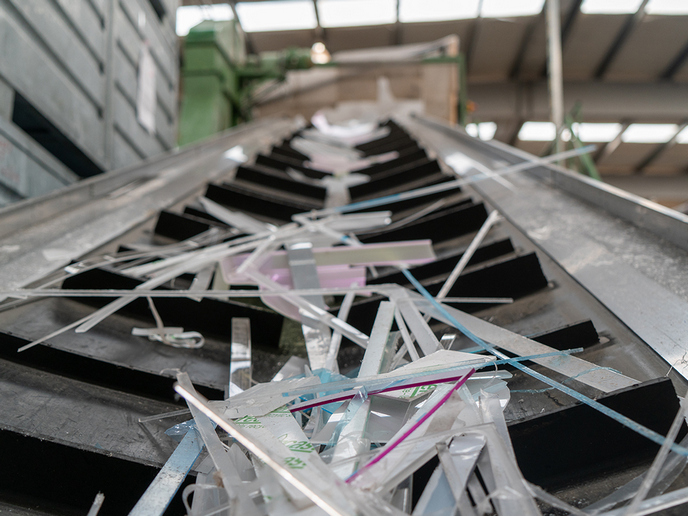
The complications involved in recycling glass reinforced plastics (GRPs) have presented industrial drawbacks, an important one being a limited number of industry interests capable of doing so. Therefore a consortium of researchers, as part of the EU-funded project PLASTIC-RECYPALLET, set out to address this drawback, but also aimed to do so at a competitive cost. One of the primary difficulties involved with GRPs is that grinding them down churns out a lot of dust as waste material. Moreover, using GRPs as filler material in such processes as injection-moulding causes the fibre-matrix for tensile strength to be ruined. Therefore finding a way to preserve the fibre strength as well as a means to break it down remained a key objective. Moreover, the consortium went further in also developing a high-tensile plastic pallet as a final product for the recycled material. The developed technology differs in three main aspects; the number of rotors, their speed and lastly, their positioning. During testing, no degradation of machinery was found and no unusual wear-and-tear ratios were recorded. The shredded material maintained a healthy size suitable for further treatment. With these differences the consortium not only presents a recycled material with better particulate size, therefore reducing dust content, but has the added benefit of producing a material that still possesses the ideal fibre length with regards to its structural integrity and its re-use in the high tensile plastic pallets. The technology may appeal not just to the plastics industry, but also waste and recycling interests en masse such as municipal waste facilities, GRP productmanufacturers and compounders.