Solar power components that can heat

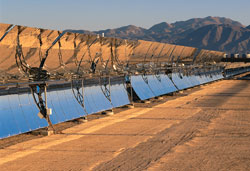
The Centro de investigaciones energéticas medioambientales y tecnológicas (CIEMAT) coordinated a multi-million Euro project aiming to make solar power less expensive. The project, entitled INDITEP, focused on the application of Direct Steam Generation (DSG) technology to parabolic solar collectors. The DSG process improves the efficiency of converting solar energy into electricity, but does so by elevating the temperature of the steam produced. CIEMAT took up the challenge of producing new system components capable of withstanding the intense heat. CIEMAT's Sol-Gel Laboratory created a novel coating for the stainless steel pipes carrying the water heated by the collector. The sol-gel technique enables the application of very thin coatings of metal oxides at low temperature. It allowed CIEMAT to lay down a very thin layer of platinum, thus exploiting the superior qualities of platinum without significantly raising production costs. CIEMAT also applied its expertise in cermets, composites of metallic and ceramic components, to deposit additional layers on the stainless steel pipes. Nickel-tungsten, silica and other materials were used to inhibit thermal degradation, platinum diffusion, thermal emittance and surface reflection while improving solar absorptance. The result of CIEMAT's efforts is a stainless steel pipe with a solar absorptance (AM1.5) of 0.95 and a thermal emittance of 0.15 at 500 degrees Celsius. Importantly, no reduction in these values was observed after subjecting the prototype to temperatures of 500 degrees Celsius in a laboratory furnace for a period of six months. CIEMAT is looking to collaborate with a partner on turning the prototype into a commercial product.