


ACARE meeting is first step to ERA - Busquin
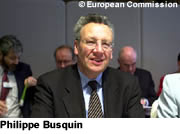
The initial meeting of the Advisory Council for Aeronautics Research in Europe (ACARE) at the Paris air show on 19 June was 'the very first practical step towards the European Research Area [ERA] in aeronautics' according to Research Commissioner Philippe Busquin, who opened the meeting. ACARE was formed following a recommendation by the authors of the 2020 Vision report, which focused on making Europe a global leader in aeronautics by the year 2020. The group's task is to compose a strategic research agenda (SRA), which will serve as a guide in the planning of research programmes. The group will meet biannually and update the agenda. 'From the ACARE members, I would expect that they accomplish their mission with all the necessary independence and authority, and that they concentrate on actions to be implemented to face the mid and long term challenges,' said Mr Busquin. The Commissioner stressed to CORDIS News that his aeronautics vision is not limited to the next framework programme. 'The next framework programme is only one aspect of this question because it's a vision for 2020, it's a European Research Area activity,' he said. Explaining why aeronautics has been selected as a European research priority by the European Commission, Mr Busquin told CORDIS News that 'aeronautics is very important because aeronautics is high technology and it's important to keep in Europe a high level of technology, but also because we are in competition, with the United States mainly, and also other parts of the world [...]. Europe must keep its place in the world,' he said. ACARE member Jim Rose, CEO of Rolls Royce stressed that research is important because 'aeronautics is a global business, but the impact is predominantly local.' This refers to the noise and gaseous pollution which the 2020 Vision says will be cut drastically in the next 20 years. 'The framework programmes are the key to acquiring the technology required to develop the vision,' he said and, noting the proposed budget for aeronautics in the next framework programme, he added that 'we remain hopeful that this can be rectified.' European programmes were also highlighted as very important by fellow ACARE member Walter Kröll, chairman of DLR. He stressed that joining forces is the 'key issue', adding that joining forces should not mean a long list of different interests, but communal goals. 'Europe has to go for it,' he declared. Assessing the potential impact of ACARE's work, Patrice Parisé from the French Ministry of Transport told CORDIS News that the group meets an actual need. 'There is no structure or committee of that kind which can highlight what the needs for the future are at the time being, so I think it's a good initiative to help the Commission and the governments to take the right decisions to know where it is appropriate to fund such types of research,' said Mr Parisé. Erik Van Nuffel, Director General for civil aviation from the Belgian Ministry for communication and infrastructure also endorsed the creation of ACARE, but questioned why other stakeholders, such as crews, pilots and passengers were not included.