


Communication outlines actions for widespread take-up of eGovernment in Europe
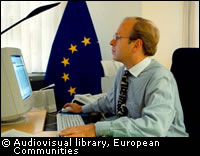
The European Commission has adopted a communication analysing the barriers currently preventing the widespread take-up of eGovernment, and proposing actions to overcome these obstacles. The communication is a response to the growing need to modernise Europe's economy and society so that Europe becomes more competitive and dynamic, while remaining capable of creating more and better jobs and bringing about greater social cohesion. The public sector is seen as having a prominent role in this process. In the words of EU Commissioner for Enterprise and the Information Society Erkki Liikanen: 'It is essential for Europe to have a public sector that helps the European economy to grow, that provides high quality services to all, and that reinforces democratic involvement.' The communication reports on the current deployment of eGovernment services and finds that all Member States have been developing plans and strategies over the past few years. Significant progress has also been made in bringing public services online. However, in order to ensure the widespread take-up of these services, the communication claims that a number of critical issues have to be addressed. The areas in which the communication claims urgent action is needed include 'access to for all' to services and service availability; protection of personal data, authentication, and identity management; harmonisation of rules governing the use and dissemination of public sector information; regulation of electronic public procurement; development of pan-European services and interoperability. In describing the obstacles, the communication also outlines in parallel some of the measures that should be taken to improve the situation. For instance, advanced forms of interactivity in public services, stimulated by broadband and multi-platform access, and improved data protection mechanisms, the communication states, should be addressed in EU research and development, piloting and implementation programmes. With regard to providing for public procurement, the communication underlines the need for a Community approach to prevent potential fragmentation of the procurement market due to incompatible electronic procurement systems and standards across Europe. In this vein, 'The Commission is considering proposing in 2004 a comprehensive three-year Action Plan to accompany the implementation of the new provisions on electronic public procurement,' states the communication. In addition to a set of specific measures, the communication also outlines two horizontal actions, namely reinforcing the exchange of good practices across various aspects of eGovernment, and leveraging investment in this sector in Europe.