


Report shows high level of satisfaction with FP5 in Finland
A new publication from the Finnish Secretariat for EU R&D (research and development) offers a summary of the country's participation in the Fifth Framework Programme (FP5). It also outlines issues that Finnish researchers believe deserve more attention in the future, such as the assessment of the framework programmes' societal impact. Finland has been involved in the EU's research programmes since 1987, and participation increased substantially with the country's accession to the EU in 1995. The years of growth in Finnish participation came to a halt during FP5, although the trend towards larger research projects means that the EU funding received by Finland is still on the increase. By February 2004, Finnish researchers had been involved in a total of 5,000 proposals for FP5 projects, of which 1,444 had been accepted. Some 2,003 entities had participated in projects, of which 600 were firms, 644 universities, 596 public research centres and 163 other non-profit organisations. Alongside high levels of participation is a high level of satisfaction. Over half of those responding to a survey prepared for the report regarded their project as successful - a figure higher than for FP4. Two thirds of respondents also declared that the benefits of participation in an FP5 project had outweighed the costs involved. University respondents were most satisfied with the cost/benefit ratio. In terms of reasons for participating in FP5, companies cited objectives such as access to new knowledge, networking and added visibility. This reflects the participants' 'aim at competence building within the projects as well as expanding their market position in Europe,' according to the report writers. Both small and medium sized enterprises (SMEs) and large companies felt that they had achieved their objectives better in FP5 than in FP4. For research organisations, new scientific knowledge, contacts and obtaining research funding were the most important objectives for participating in FP5. Although participants from business felt that involvement had provided them with an overview of current developments in the science and technology fields, as well as trends among competitors and in other business fields, many recognised a need to forge closer links between the framework programmes, national research programmes and other collaborative research programmes such as Eureka and COST. 'The optimal situation would be that the various programmes benefit both national and EU interests. In the future, the elaboration of this streamlining strategy should be examined in more detail among national policy-makers,' states the report. Another issue needing more attention is support for framework programme participants, according to the report writers. They highlight potential problems in FP6 caused by a shift to larger projects, and call for the further rationalisation and shortening of procedures as well as more tailored counselling services and professional management. The report also notes the increasing importance of the framework programmes' societal goals. This can be interpreted in two different ways, according to the report: an increased awareness among project proposers of the importance of societal targets as evaluation criteria, or increased acceptance of societal targets as the ultimate goal of R&D. The report states that societal objectives should be further embedded in the EU research programmes, and that this should be achieved by including concrete descriptions of expectations in programme descriptions. Measures and indicators to assess the societal impacts of R&D should also be developed and included in the evaluation process, the report adds.
Kraje
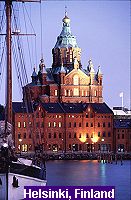
Finland