


UK festival hears calls for greater public engagement with science
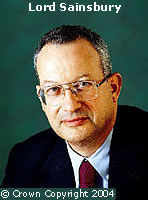
Scientists, industry and policy makers must engage more effectively with the public on the issue of emerging science and technologies, participants at the British association for the advancement of science (BA) 'Festival of Science' were told on 6 September. Outlining the government's new science and society agenda, the UK Minister for Science and Innovation, Lord Sainsbury, argued that science is crucial for creating prosperity and new technologies of benefit to society as a whole. However, he warned that such technologies also raise new ethical, safety, wealth and environmental concerns, which must be fully debated before they come to market. 'New technologies create new exciting opportunities but can also raise concerns and fears,' said Lord Sainsbury. 'The science and society agenda is about building a series of inclusive debates to explore the ethical, safety, health and environmental implications of emerging technologies.' 'We need much greater consideration and debate by scientists, industry, and government and the public of the regulatory issues raised by new technologies,' he added. The Minister's sentiments were echoed by BA President Professor Dame Julia Higgins. Professor Higgins argued that the public has little control over the uses to which science is put, and must suffer any ill consequences of its applications, despite having put up the money to fund the science in the first place. 'This is a mismatch of risk and control and, if one believes much of current reporting in the media, the public is becoming increasingly uncomfortable with this mismatch,' said Professor Higgins. 'We can't have a referendum on the funding of each new piece of research, [however] it does seem to me that we have to find new ways of folding public concern into this process, encouraging serious debate on serious scientific questions so that their views can inform both political and commercial decisions being taken in their name,' she added. Such debates, believes Professor Higgins, would help to avoid the sort of public backlash in her particular field of expertise, nanotechnology, that was seen against genetically modified organisms (GMOs). Reflecting on her own experiences, Professor Higgins revealed that initially she did not believe there would be a reaction against nanotechnology: 'I thought, this is straightforward chemistry with inert materials: what possible danger is there? And it didn't take a moment to think that we're dealing with tiny particles, much smaller than are conventionally unleashed into the atmosphere. [...] Then you think: shouldn't we be thinking about potential problems before they become problems, and certainly before someone else raises them? It's worth having the debate early.' 'Only by entering a real dialogue admitting the risks as well as hailing the potential benefits of new knowledge will we maintain the respect and trust of society, and restore it where it has been damaged,' Professor Higgins concluded. As part of the UK government's efforts to encourage greater public engagement with science, Lord Sainsbury announced a new 1.75 million euro scheme to fund projects aimed at facilitating a dialogue between scientists and the public. The grants will support projects in what the government has identified as critical areas of science and technology: increasingly intelligent computer systems; nanotechnology; understanding brain processes; animals and medical research; energy and climate change; and trust and security in the use of IT and the Internet.
Kraje
United Kingdom