Sustainable grasslands ecosystems management

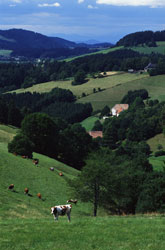
Since grasslands are a sub-climax vegetation community,they must be actively managed. However, the management practices employed need to be ecologically and economically sustainable, in order to enhance the highly valued landscape and environment, as well as maintain and sustain rural economies. Among other aspects, there is a need to ensure that appropriate grazing management systems and livestock breeds are used. The FORBIOBEN (For Biodiversity Benefit) project aimed at investigating the potential effects of managing semi-natural grazed grasslands mainly for enhancing their biodiversity compared to managing for efficient livestock production. As part of the project, researchers focused on the foraging behaviour of grazing animals and how this is influenced by the management intensity and selection of breed types. Evidence emerging from the study of animal grazing behaviour in grass-dominated sites, by contrast to heather-gorse communities, showed that breed types does not seem to affect the animal gazing behaviour. At grass-herb sites, animals preferentially included more than just grass species in their diet. The overarching objective of this study is these findings to add insights into the agri-environmental policy design process, addressing the perceived limitations of conventional agricultural schemes. The research group offers consultancy and training services to organisations, in particular to organisations involved in environmental and natural resources management, extension services or policy making.