Improving our understanding of sea ice

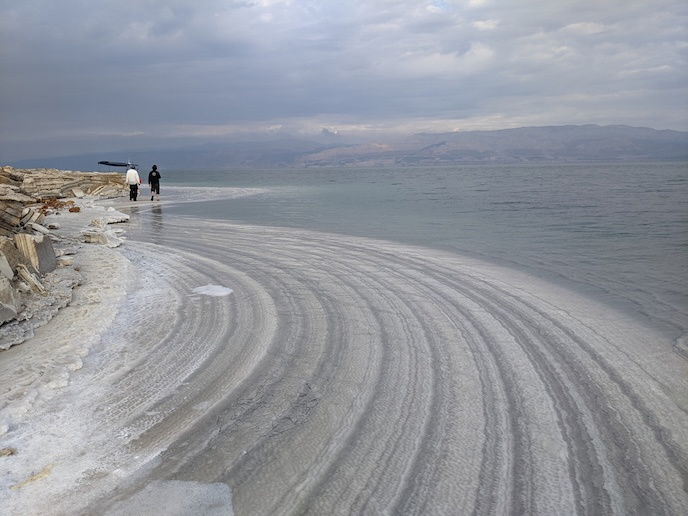
Sea ice plays an important role in the Earth's energy and water budgets. Evidence is growing that climate change is affecting the formation of sea ice and could lead to significant changes in sea level across the globe. It is imperative, therefore, to improve our understanding of sea ice in order to accurately predict its future evolution. This is exactly what the IOMASA project, which involved several leading European academic institutions and meteorological institutes, aimed to achieve. In IOMASA, the Technical University of Denmark (DTU) tackled the issue of sea ice emissivity. Specialised instrumentation, such as the Advanced Microwave Sounding Unit (AMSU), was employed to establish emissivity values over known regions of ice. From there, the atmospheric scientists with the DTU modified a snow cover model (Microwave Emission Model for Layered Snow-packs - MEMLS) to address sea ice. Since sea ice contains brine while snow does not, it was important to account for the increased permittivity associated with this brine, especially in young sea ice. Polder - Van Santen mixing formulas were employed for this purpose. For the frequency range of MEMLS to be valid, it was necessary to calculate the scattering coefficient of sea ice based on scattering theory. The DTU scientists found that the Born approximation, which follows a power law, was the most appropriate. Furthermore, since accuracy improves as frequency increases, the upper range of the microwave spectrum can be exploited. The DTU is looking for opportunities to follow up on the initial model development that has taken place in the framework of the IOMASA project. The hope is to enable accurate estimation of sea ice coverage from remote sensing data collected from Earth observation satellites.