



Classroom reality gets virtual boost

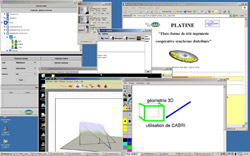
Notwithstanding their importance, ICT technologies have also brought significant changes in the education system as a whole, both in its effectiveness and its methodologies. The Lab@Future project, engineered under the IST funded programme of the European Commission provides the 'Platine' environment as one such example. Part of dynamic education methods, it provides platforms whereby students can interact digitally or virtually within a structured, educational platform. A virtual tour of ancient Rome, for example, yields a never before richness in historical perspectives. However, providing the wherewithal of such experiences in order to ensure they remain educational rather than just entertainment requires the inclusion of specific tools. Such sessions can be structured, monitored and may contain intellectual constructs. As such the 'Platine' environment provides three such services; administrative support tools, asynchronous and also synchronous communication tools for asynchronous and synchronous phased sessions. These tools allow the possibility for brainstorm, lectures, co-design, remote help and tele-maintenance. Now, whether these innovative technologies will be deployed as mechatronic systems, as shared distributed virtual environments, as augmented reality interfaces or as mobile technologies, the Lab@Future project has taken a "forward thinking" approach. Its intention is to further nurture the educational "micro-world" with real world and social activities. While a system prototype has been developed as well as the Lab@Future platform the project developers hope that with future developments the technology can enter a wide range of learning domains. These include classic school structures and virtual campuses. Further research and development support is required, with either private or public support.