Multidisciplinary seismic hazard assessment

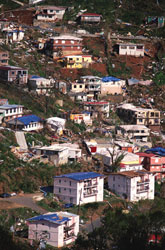
Istanbul has been inhabited for thousands of years, serving at times as the capital of the Roman, Byzantine and Ottoman empires. Today it is a modern city with a population surpassing twelve million. The city has been struck by several earthquakes, most recently in 1999, as it is located in a seismically active region. There is considerable concern regarding the possible consequences of a very strong earthquake. The University of Bergen explored new methods of seismic hazard assessment during the RELIEF project, which investigated the 1999 earthquakes in detail. Their efforts focused on integrating feedback from various disciplines. They discovered that deterministic methods outperformed their probabilistic counterparts. More specifically, ground motion models, complete with complex multi-asperity fault rupturing, were used in combination with vulnerability functions, which express the relationship between seismic forcing and building damage. The research culminated in the generation of building damage maps for Istanbul in the case of a strong earthquake with an epicenter in the neighboring Marmara Sea. The maps and multidisciplinary seismic hazard assessment techniques will be of use for officials in Turkey as well as those in other earthquake-prone regions.