On-site water analysis

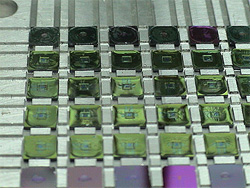
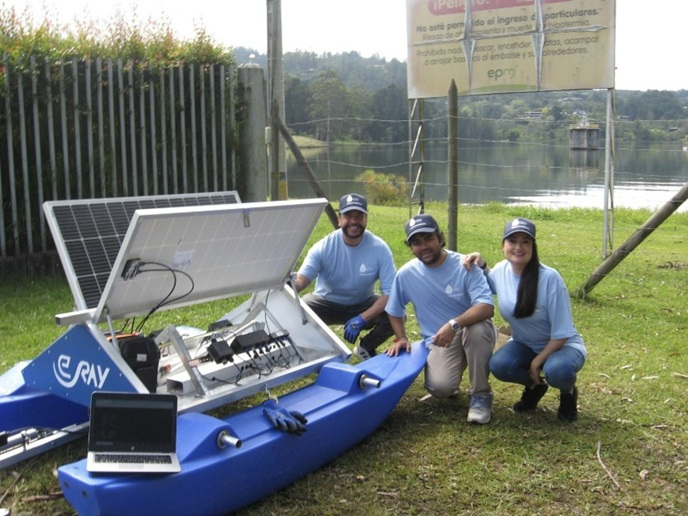
Most current methods of water analysis involve taking samples from the source and transferring it to the laboratory for testing. This method of remote analysis is often unsuitable since the delay between sampling and obtaining results could result in serious environmental repercussions. The ability to perform measurements at the site in question is the aim of current analytical methods. To this end, project SEWING has developed a range of probes to allow such measurements to be made. The probes are optimised versions of miniaturised solid-state potentiometer transducers. Specifically two kinds of ion-sensitive field effect transistors (ISFETs)were developed, with back-side and front-side contacts. In their original form, these probes allow the accurate determination of water pH, a measure of the H+ ion concentration of water. This type of probe was then modified to allow the determination of other ions, specifically, NH4+, K+, Na+, NO3-. This was achieved by depositing specific membranes on the probe, which are sensitive only to these ions. In this way any other ions cannot interfere with the reading. Two different methods were used to achieve deposition of the membranes of the probe. One method is semi-industrial and uses an automated dispensing unit. The other industrial method deposits a UV-polymerisable membrane on the probe using a spin coating set up. The probes have an excellent working range and a long lifetime to allow monitoring of these ions in real situations. With the appropriate installation, they can be used for the continuous monitoring of natural water resources and for wastewater. With further development, probes dedicated to the monitoring of other ions can be developed, and their use could be extended to the analysis of effluent in high-risk industrial areas.