Determining the patterns of exposure to pesticides

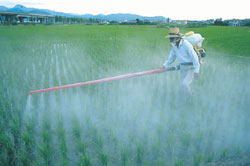
Pesticides are widely used in agriculture for preventing, or repelling pests, including insects, mammals, plant pathogens, weeds and microbes that destroy crops and property. As a consequence, a great part of the population may be exposed to these compounds. In spite of this extensive use, knowledge on the health risks associated with prolonged exposure to these compounds is rather poor and major uncertainties still exist. In the case of prolonged, low-dose exposure, however, the association between pesticides and the occurrence of adverse effects on human health is often less clear and thus difficult to prove. The EC funded project EUROPIT takes essential steps to promote health risk management at the workplace by assessing the immune competence of workers occupationally exposed to organ phosphorous or dithiocarbamates. Assessment starts with the identification of hazard, which must be integrated with information concerning the dose adsorbed by workers, the dose-effect and dose-response for the hazards identified. In agricultural fields, workers are exposed to pesticides in numerous activities from formulation handling, preparation, application and when in contact with residues on the surface of treated leaves. This difficulty is tackled by defining "exposure profiles" from all of the activities taken into account and at a local level. These profiles help determine the contribution of each significant variable affecting the exposure levels. Once the potential for exposure has been characterised, it can be quantified and compared with an established safe exposure level. For the assessment of the exposure, the urinary excretion of the main metabolite of these compounds, ethylenethiourea (ETU) is determined. The urinary ETU levels determined from a control group of unexposed subjects, are set as a reference biological value for the general population at a European level. Through knowledge of the patterns of exposure to pesticides, researchers will be able to consider whether the risk posed to agricultural workers meets the established safety standard of "reasonable certainty of no harm".